
The Future of Steam Boilers in Africa
Introduction
Across Africa, industries are expanding rapidly. From food processing plants in Kenya to manufacturing hubs in Nigeria and agro-industrial zones in East Africa, the demand for reliable steam systems is growing every year.
Steam boilers remain at the center of this industrial growth. However, the future of steam technology is changing fast—driven by efficiency demands, sustainability goals, and automation.
At Wilest Energy Solutions Ltd, we are actively involved in designing modern boiler systems that meet the evolving needs of African industries.
1. Shift Toward Energy-Efficient Boilers
One of the biggest trends shaping the future is energy efficiency.
Traditional boilers often waste heat through poor combustion and inadequate insulation. Modern systems now focus on:
- improved fuel combustion
- heat recovery systems
- better insulation and lagging
- reduced steam losses
In Africa, where energy costs are high, efficiency is no longer optional—it is essential.
2. Rise of Automation and Smart Controls
The future of boilers in Africa is digital.
Modern steam systems are increasingly using:
- automated pressure controls
- digital temperature monitoring
- smart safety shutdown systems
- remote performance tracking
This reduces human error, improves safety, and ensures consistent production.
Factories that adopt automation will have a major competitive advantage.
3. Growth of Biomass and Hybrid Boilers
Africa’s agricultural strength is driving a shift toward alternative fuels.
Instead of relying only on diesel or electricity, industries are adopting:
- biomass boilers (using agricultural waste)
- hybrid systems (firewood + diesel + electric support)
This helps reduce fuel costs while improving sustainability.
Countries like Kenya are leading in biomass adoption due to availability of agricultural by-products.
4. Focus on Sustainability and Carbon Reduction
Environmental responsibility is becoming a major requirement in industrial operations.
Future steam boiler systems will focus on:
- lower carbon emissions
- cleaner combustion systems
- efficient fuel usage
- reduced industrial waste
Factories that ignore sustainability will face higher operational and regulatory pressure.
5. Strong Demand from Key African Industries
The growth of steam boiler systems is being driven by:
- dairy processing industries
- tea factories in East Africa
- food and beverage manufacturing
- textile and laundry industries
- hospitals and institutions
- agro-processing plants
As Africa continues to industrialize, steam demand will continue to rise.
6. Importance of Proper Engineering and Installation
The future is not just about better boilers—it is about better systems.
Poor installation leads to:
- energy losses
- frequent breakdowns
- unsafe operations
- high maintenance costs
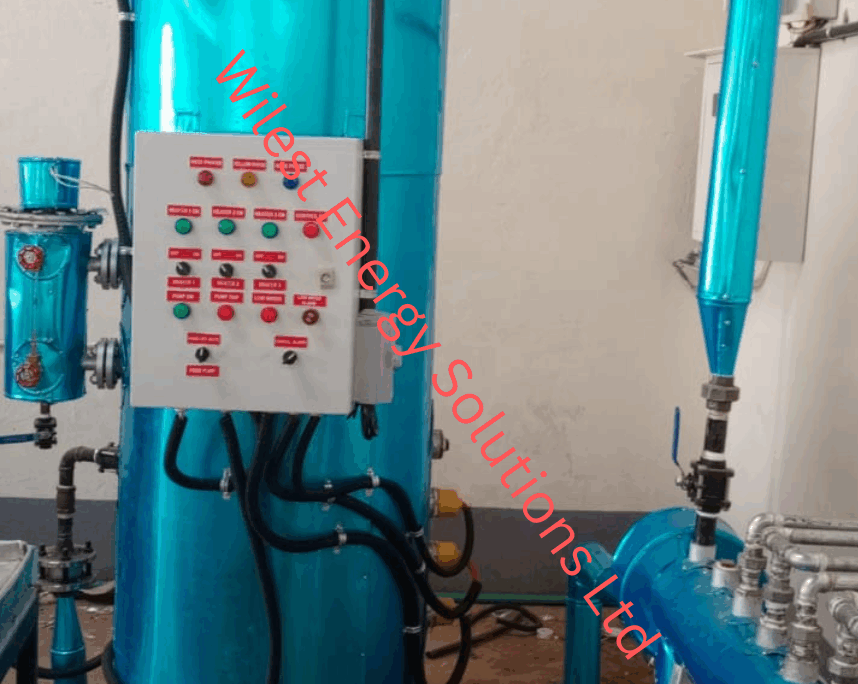
Professional engineering ensures long-term efficiency and safety.
At Wilest Energy Solutions Ltd, we focus on complete system design including:
- boiler manufacturing and installation
- steam pipework engineering
- insulation and lagging systems
- condensate recovery solutions
- maintenance and technical support
Conclusion
The future of steam boilers in Africa is defined by efficiency, automation, sustainability, and smart engineering.
Industries that invest in modern steam systems today will enjoy lower costs, higher productivity, and stronger competitiveness tomorrow.
Steam is not becoming obsolete—it is becoming smarter.
Contact Wilest Energy Solutions Ltd
Wilest Energy Solutions LtdToll Weighbridge, Thika Super-Highway, Ruiru, Kiambu, KenyaPhone: +254 707 346 616Email: [email protected]