
We Are Building the Future of Industrial Steam
Kenya’s industries are changing.
Factories are looking for ways to produce more, reduce operating costs, improve energy efficiency, and operate more sustainably.
The steam boiler of the future will not simply burn fuel and produce steam.
It will be smarter, more efficient, more automated, and more responsive to the needs of the factory.
At Wilest Energy Solutions Ltd, we believe Kenya should not wait for the future.
We should build it.
Biomass Will Play a Bigger Role
Kenya has an enormous opportunity to turn locally available agricultural and forestry residues into industrial energy.
Biomass fuels such as wood chips, briquettes, bagasse, coffee husks, rice husks, and other agricultural residues can provide an alternative to conventional fossil fuels where the fuel supply and boiler design make sense.
For industries with reliable access to suitable biomass, modern biomass boilers can help reduce dependence on fossil fuels while creating value from locally available resources.
The future is not simply about producing steam.
It is about producing steam more sustainably.
Smart Boiler Automation
The boiler room is becoming smarter.
Modern control systems can monitor important operating parameters and automatically respond to changing production demands.
Automation can help control:
- Steam pressure
- Water levels
- Burner operation
- Fuel consumption
- Temperature
- Safety conditions
This reduces unnecessary manual intervention and helps operators maintain more consistent boiler performance.
The future factory will increasingly depend on intelligent systems rather than constant manual adjustment.
IoT Will Change Boiler Monitoring
Imagine being able to monitor your boiler’s performance without standing beside it.
With connected monitoring technologies, important operating data can be collected and viewed remotely.
Factory managers can potentially monitor:
- Boiler pressure
- Temperature
- Fuel consumption
- Water levels
- Operating hours
- Fault conditions
- System performance
This opens the door to predictive maintenance—identifying unusual operating conditions before they become major failures.
Instead of asking, “Why did the boiler stop?”
The future asks:
“Why is the boiler beginning to behave differently?”
That difference can save downtime and money.
Energy Efficiency Will Become a Business Priority
Energy is one of the biggest operating costs for many industries.
The future therefore belongs to factories that understand every unit of energy they consume.
Efficient boilers will work together with:
- Proper insulation
- Efficient burners
- Steam traps
- Condensate recovery
- Heat recovery systems
- Efficient steam distribution
- Proper boiler water treatment
The objective is simple:
Get more useful production from every unit of energy consumed.
Sustainability Is Becoming Part of Industrial Strategy
Environmental responsibility is no longer something businesses can ignore.
Manufacturers are increasingly looking at how their operations affect energy consumption, emissions, waste, and the environment.
This is driving interest in cleaner energy sources, efficient equipment, waste reduction, and better resource management.
For steam systems, this means moving from simply asking:
“How much steam can my boiler produce?”
to asking:
“How efficiently and sustainably can we produce that steam?”
Carbon Reduction Starts in the Boiler Room
Reducing carbon emissions does not necessarily mean abandoning steam.
It means making steam systems smarter and more efficient.
Reducing unnecessary fuel consumption, recovering condensate, improving combustion, insulating steam lines, and selecting appropriate fuels can all contribute to reducing the carbon intensity of industrial operations.
Every unit of energy saved is energy that does not need to be generated again.
Kenya Needs Local Engineering for the Future
The future of industrial steam cannot depend entirely on imported technology.
Kenya needs engineers, fabricators, technicians, automation specialists, and manufacturers capable of designing and supporting modern industrial systems locally.
Local engineering means:
- Faster technical support
- Easier maintenance
- Local fabrication
- Faster access to spare parts
- Systems designed for local operating conditions
- Development of Kenyan technical skills
This is where companies like Wilest Energy Solutions Ltd have an important role to play.
We Are Building That Future
At Wilest Energy Solutions Ltd, we see the future of steam engineering as more than boiler fabrication.
It is about complete energy and utility systems.
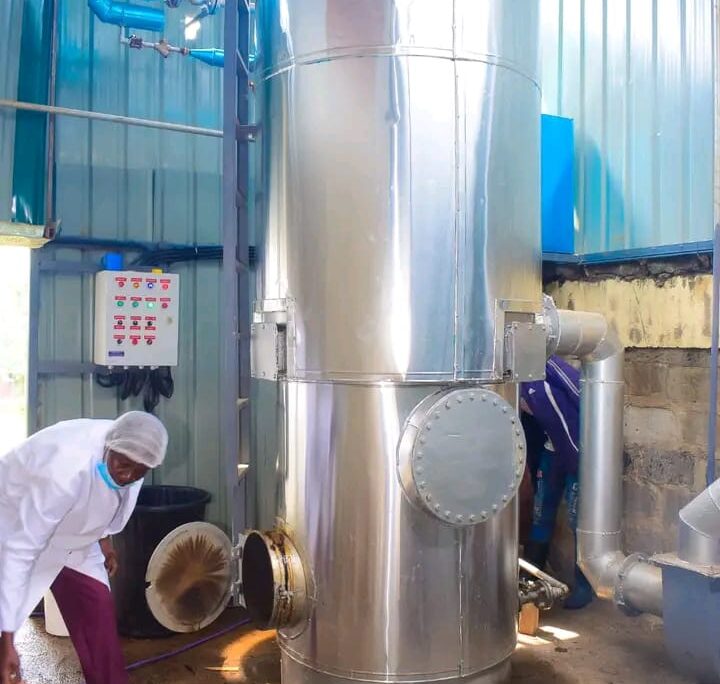
We design, fabricate, install and service steam boiler systems while integrating the supporting systems that make factories more efficient.
From biomass boilers and burner systems to steam distribution, condensate recovery, insulation, automation, and utility engineering, our goal is to help Kenyan industries move toward smarter and more efficient production.
We are not waiting for the future to arrive.
We are engineering it.
The Future Is Already Beginning
The Kenyan factory of tomorrow will need more than a boiler.
It will need a steam system that understands its production requirements, monitors its own performance, minimizes energy losses, and operates as efficiently as possible.
Biomass will continue creating opportunities where sustainable fuel supplies are available.
Automation will reduce unnecessary manual intervention.
IoT will make monitoring and predictive maintenance more practical.
Energy efficiency will become increasingly important.
And sustainability will increasingly influence industrial investment decisions.
The future of steam in Kenya is not disappearing.
It is becoming smarter.
Wilest Energy Solutions Ltd
We believe Kenya has the engineers, industries, resources, and ambition to build a more efficient manufacturing future.
Our role is to provide the engineering systems that help make that future possible.
From boiler fabrication to complete industrial utility systems, we are building the future of steam in Kenya—one factory at a time.
📍 Toll Weighbridge, Thika Super-Highway, Ruiru, Kiambu, Kenya
📞 +254 707 346 616📧 [email protected]